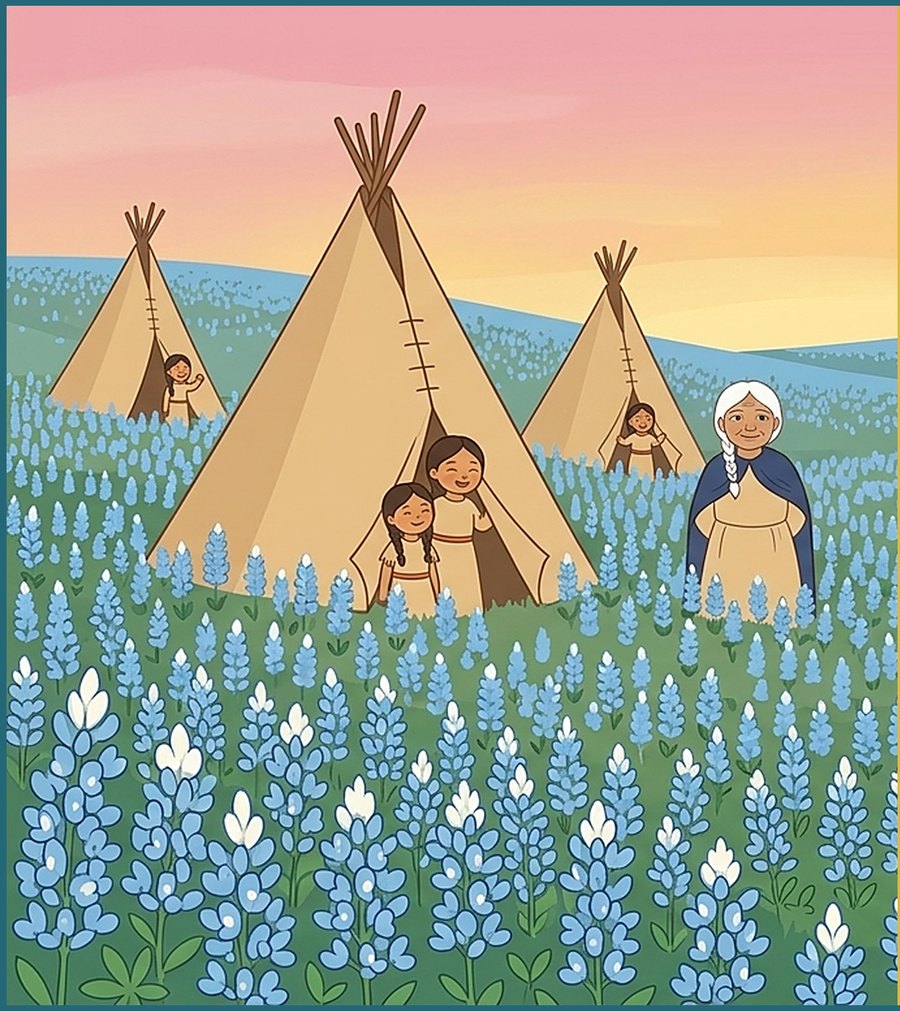
Ages 3–4
Large areas first: sky, grass, the big tent. Holding the pencil lower down, closer to the tip, helps small hands. Staying inside the lines is not the goal. An adult should sharpen. Skip tiny feather details if they frustrate; a simple wash of blue is enough.
Ages 5–6
Try two layers: a light pass, then a little more in the shadows (the shady side of a tipi, the grass under the flowers). On “spot the 7 differences” pages, find and circle the differences before coloring the rest, so the marks stay easy to see.
Ages 7–8
This is a good age for the sunset blend and for leaving white paper in the flower tips. On connect-the-dots, use a slightly darker pencil and light pressure to join the numbers, then color the shape you revealed — the doll, a feather, or the bluebonnet.
Spot the 7 differences (pages 5, 11 and 16)
There are three of these: the doll, the hill, and the flower field. Circle each difference with a contrasting color (terracotta or a red), not with the same blue you will use for the flowers. If you color the whole picture first, the seven changes are harder to find. The answers are on page 23 if you want to check later.
Connect the dots (pages 7, 13 and 17)
The pictures hide the doll, a feather, and the blue flower. Follow the numbers slowly. A blunt tip jumps and skips a number; a medium point is easier. When the line is finished, color the object with the palette above — sand and blue feathers for the doll, sky blue for the feather and the flower.
Maze, word search, shadows, and order (pages 9, 15, 19, 20)
The maze leads up to the hill. The word-search page uses words from the story — star, doll, feather, rain, flower, grandmother, hill, Texas — in the language of that edition. On the shadow page, a thin brown or grey line is enough to match each character before you color them. On “put the scenes in order,” number them first, then color.
Count, family, and certificate (pages 21, 22 and 24)
Page 21 asks you to count flowers, feathers, and stars. Page 22 is a blank family page — the child draws and colors their own family, using the same warm sand, brown, and sky-blue palette if they like. Page 24 is the Little Reader certificate. That is also where the QR code will point back to this page.